
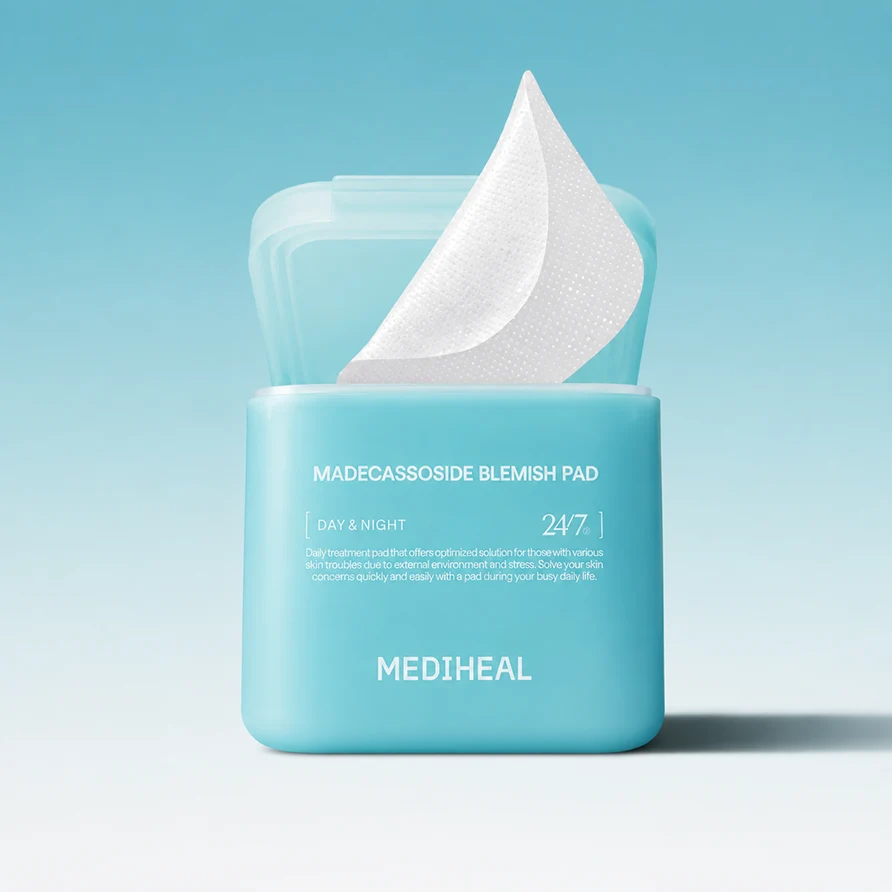
The Mediheal Madecassoside Blemish Pad is a centella-based toner pad that Mediheal positions for the look of post-blemish marks and the redness around them. As Korean weather turns cooler and drier, the Mediheal Madecassoside Blemish Pad is again showing up in Naver posts about seasonal skincare.
What makes it interesting isn’t one standout ingredient. It’s how Korean users treat a single pad as three different steps. Here’s what’s in it and how Korean reviewers use it.
Why It’s Getting Attention in Korea
Mediheal, best known for sheet masks, launched the Madecassoside Blemish Pad at Olive Young in late August 2022 as part of a set of four new toner pads. At launch, the brand said it had doubled the madecassoside extract content and used liposome technology to break down active ingredients into fine particles. It also said the pads could be used for wiping or as a mini sheet mask.
The pad now sits in Mediheal’s seven-pad Derma Toner Pad lineup at Olive Young, which the retailer labels as an upgraded renewal. Korean bloggers tend to revisit it in fall and winter, when they describe their skin as flakier and more reactive.
What’s in the Mediheal Madecassoside Blemish Pad
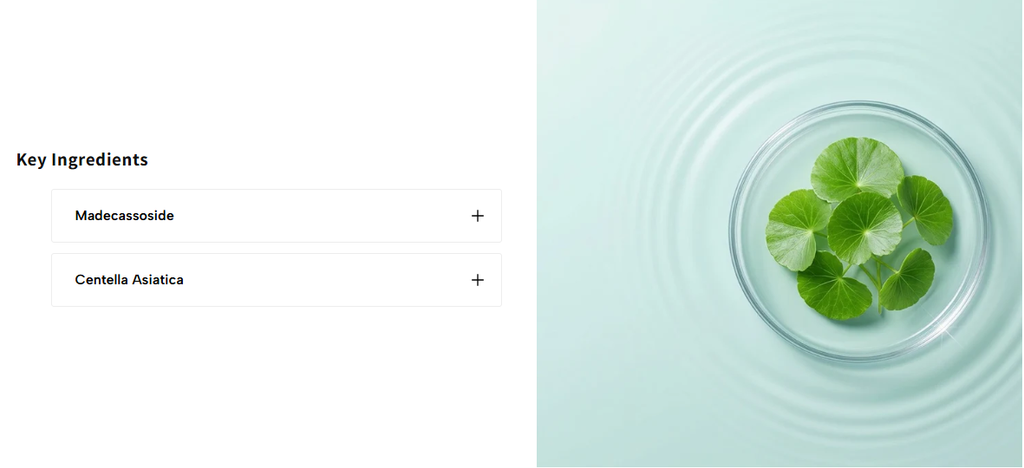
The Korean ingredient list centers on centella asiatica in several forms:
- Centella asiatica extract, plus root and leaf extracts
- Madecassoside, asiaticoside, madecassic acid, and asiatic acid, the main active compounds found in centella
- Niacinamide, listed fourth, right after water and two base ingredients
- Dipotassium glycyrrhizate and allantoin, two common soothing ingredients
The label also lists several essential oils: juniper (cedarwood) oil, mugwort oil, patchouli oil, and rosemary leaf oil. If essential oils tend to bother your skin, that’s worth noting before buying.
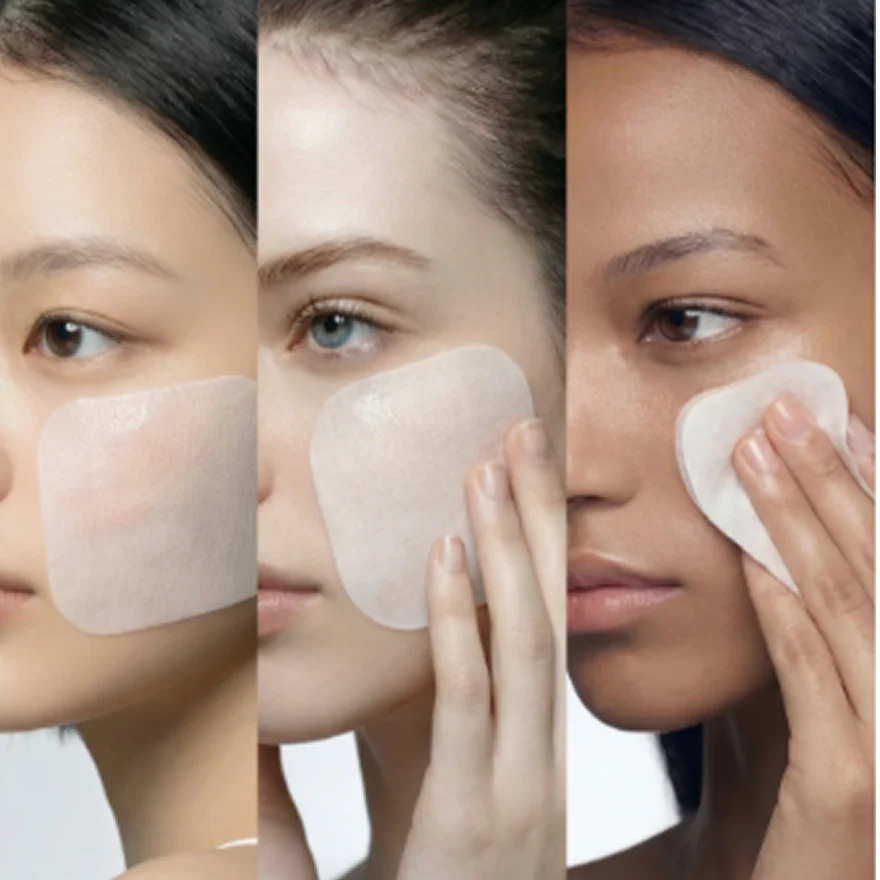
Mediheal’s official direction is simple: place the pad on the area you want to focus on, then wipe gently along the skin’s texture.
Three Ways Korean Reviewers Use It
Naver reviewers describe three distinct methods, each with its own Korean nickname:
- Wipe (dak-to). After cleansing, swipe the textured side gently along the skin. Some reviewers layer two pads for a more thorough pass. Many treat this as their morning default.
- Pat-in (heup-to). Lay the pad flat on the skin, then tap it with your fingertips to press the essence in. Reviewers with sensitive skin say they prefer this on days their skin feels reactive.
- Mini mask (paek-to). Leave the pad on one area, such as a patch of marks or a flushed cheek, for about five minutes, then remove it.
The mini-mask method matches how Mediheal described the pad at launch. The five-minute timing comes from reviewers rather than the brand.
How It Feels, According to Korean Reviewers
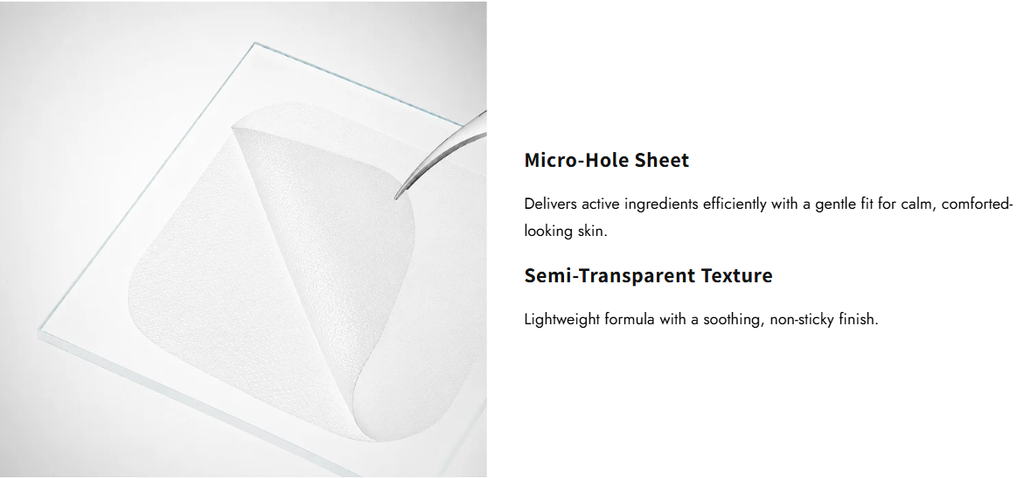
Reviewers describe a soft, close-fitting fabric soaked in a watery essence with a faint slip. Several say the pad doesn’t drip down the neck when pressed on the cheek, and that it feels gentle rather than scratchy.
One long-term user with sensitive skin wrote that the pad didn’t sting even on bad skin days and left her skin feeling calm rather than stripped. Others mention a small picker tucked into the lid, which keeps fingers out of the jar.
The more realistic reviews are clear about expectations. They describe the pad as a steady daily soothing step, not something that makes marks disappear quickly.
Who It May Suit — and Who Might Skip It
The pad may suit people who like toner pads, want a centella-focused soothing step, and are interested in the look of lingering marks after breakouts. The 100-pad jar also works well for anyone who wants to switch between wiping and short masking without buying separate products.
It may not suit people who avoid essential oils or added scent, given the oils on the ingredient list. Anyone dealing with active or persistent skin problems should treat this as everyday skincare, not a treatment.
What Stands Out — and What Remains Unproven
What stands out is a centella-heavy ingredient list with all four major centella compounds plus niacinamide. The pad is also flexible enough to use as a wipe, a pat-in essence, or a quick mask. At ₩26,000 for 100 pads, it’s an affordable daily step by Korean pricing.
What remains unproven is how much it changes the look of marks over time. The “doubled madecassoside” claim comes from Mediheal’s 2022 launch, and the brand didn’t say what it was compared with. Korean reviewers mostly describe calmer-feeling skin, not dramatic visible change.
Product Snapshot
- Product Name: Mediheal Madecassoside Blemish Pad (메디힐 마데카소사이드 흔적 패드)
- Brand: Mediheal
- Size: 100 pads per jar (also sold as a 100 + 100 bundle)
- Korean List Price: ₩26,000 for 100 pads at Olive Young (₩17,900 sale price as of October 14, 2026); ₩39,900 for 100 + 100
- Launch (Korea): August 2022; now part of Mediheal’s refreshed Derma Toner Pad lineup
- Key Ingredients: Centella asiatica extract, madecassoside, asiaticoside, madecassic acid, asiatic acid, niacinamide, dipotassium glycyrrhizate, allantoin
- Texture / Format: Soft fabric pads soaked in a watery essence, in a jar
- Best Suited To: Toner-pad users who want a centella-focused soothing step
- Source & Sponsorship Note: Korean reviewer impressions are drawn from Naver blog posts, one of which appears to come from a retailer’s blog; we couldn’t confirm sponsorship status for the others. Size, price, and ingredients were checked against the official Olive Young listing, and launch details against 2022 Korean media coverage.
Last checked: October 14, 2026