
Madecassoside is one of the main active compounds in Centella asiatica (cica), and it is the reason so many Korean “recovery” creams put it right on the label. In short: it is best known for calming the look of redness and supporting skin that feels irritated or over-exfoliated, while the strongest research behind it is still mostly from lab and animal studies.
Below, we break down what madecassoside is, how it differs from madecassic acid and asiaticoside, what the research actually says about its benefits, possible side effects, whether Madeca cream is worth it for your skin, and how to use it in a routine.
Quick answer: Madecassoside is a soothing, barrier-supporting ingredient from Centella asiatica. It is generally well tolerated, works best on skin that is irritated, dry, or recovering, and does very little you will notice if your skin is already calm and balanced.
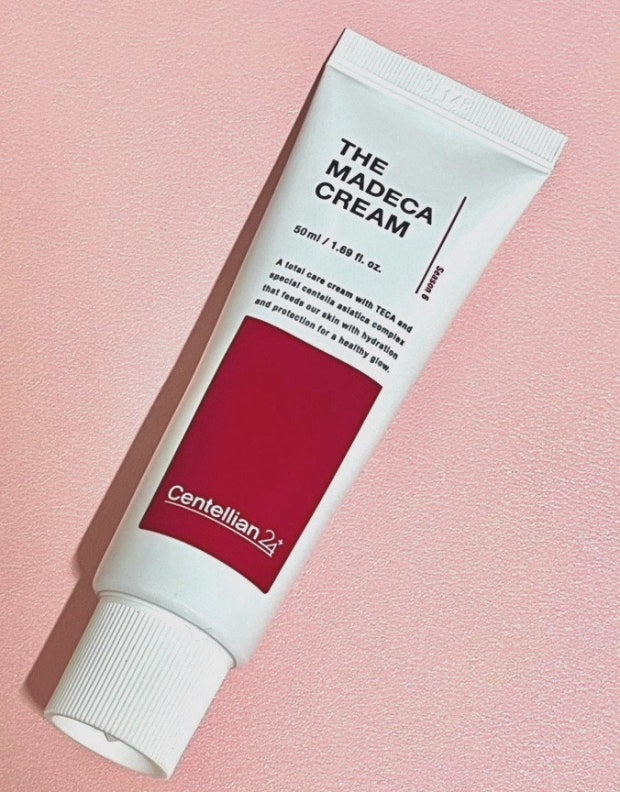
What Is Madecassoside?
Madecassoside is a pentacyclic triterpene saponin, one of the “centellosides” found in Centella asiatica (also called gotu kola or tiger grass). Centella has four headline compounds, and they often show up on ingredient lists together, which is where the confusion starts.
| Compound | Type | How it relates |
|---|---|---|
| Madecassoside | Saponin (glycoside) | The sugar-bound form; the one most Korean “Madeca” products highlight |
| Madecassic acid | Triterpenic acid (aglycone) | The core of madecassoside without its sugar chain |
| Asiaticoside | Saponin (glycoside) | Madecassoside’s sister compound, most studied for collagen and wound healing |
| Asiatic acid | Triterpenic acid (aglycone) | The core of asiaticoside without its sugar chain |
When a label says “TECA” or “titrated extract of Centella asiatica,” it usually means a standardized mix of asiaticoside, asiatic acid, and madecassic acid. “Cica” on its own is a marketing term and tells you little about how much of any of these compounds is inside.
Madecassoside Benefits: What the Research Actually Says
It is worth separating what has been shown in people from what has only been shown in cells or animals. Two good overviews are a 2013 review in Advances in Dermatology and Allergology and a 2023 review of asiaticoside and madecassoside in the Journal of Cellular and Molecular Medicine (links in Sources below).
- Soothing and redness: In lab models, madecassoside lowered inflammatory signals linked to acne bacteria. This is why it is so common in products for irritated, breakout-prone, or post-treatment skin. Evidence level: mostly lab studies.
- Hydration and barrier support: Reviews describe madecassoside improving skin hydration in lab and animal studies. In a small 6-month study of 20 women aged 45–60, a cream with 0.1% madecassoside plus 5% vitamin C improved hydration, firmness, and elasticity, though vitamin C was part of the formula. Evidence level: limited human data.
- Skin recovery and collagen: Madecassoside has been linked to collagen production in skin cells and faster wound closure in animal studies. This is the basis for “recovery” claims, but those results come mainly from preclinical research, and the 2023 review notes there are few verified human studies on wound healing. Evidence level: preclinical.
- Gentle profile: Unlike exfoliating acids or retinoids, madecassoside is not designed to resurface skin, so it is generally comfortable to use daily and alongside stronger actives.
Bottom line: madecassoside is a reasonable “comfort” ingredient for stressed skin, but cosmetics are not medicines. Product results depend on the whole formula, and claims like “repairs your barrier overnight” go beyond what the evidence supports.
Madecassoside Side Effects: Who Should Be Careful
Centella and its compounds are generally considered low-risk in skincare, and side effects are uncommon. They are not zero, though:
- Allergic reactions: Published case reports describe eczema and itchy, blistering reactions after repeated use of Centella-based topical products. If you have known plant allergies, take this seriously.
- Stinging or burning: This is more often caused by other parts of the formula (fragrance, essential oils, alcohol, preservatives) than by madecassoside itself, especially on freshly exfoliated or broken skin.
- Breakouts: Rich “recovery” creams can feel heavy on oily skin. When people break out on a cica cream, the texture and base oils are usually the culprit, not the madecassoside. See Can Cica or Barrier Creams Actually Make Your Skin Worse? for the warning signs.
Patch test first: apply a small amount behind the ear or on the inner arm once a day for a few days before using it on your face. Stop if you notice itching, swelling, or a rash, and see a dermatologist if a reaction does not settle, or if your skin is irritated from a medical condition rather than everyday dryness.
Does Madeca Cream Really Work?
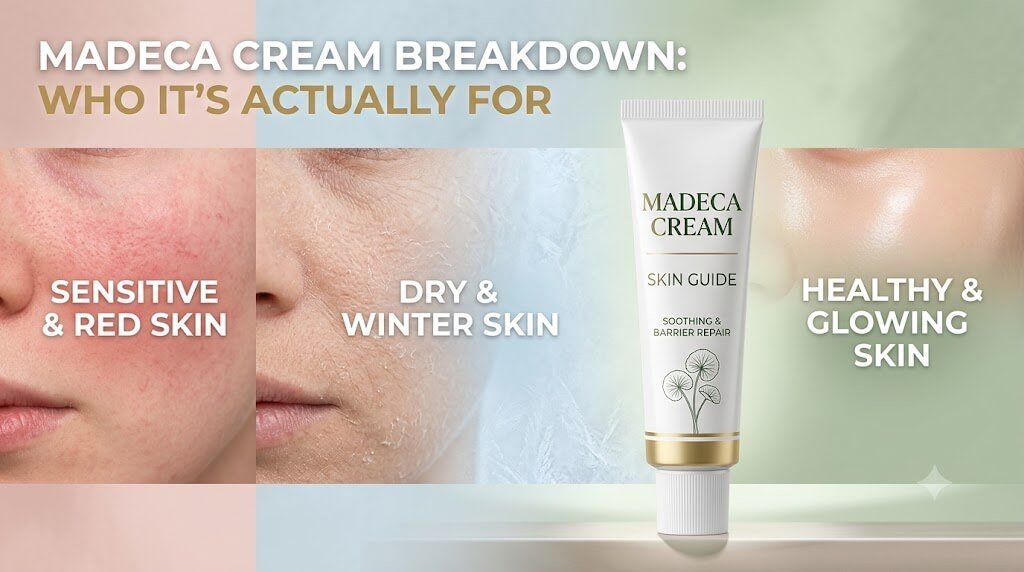
Madeca cream is a soothing moisturizer, not a treatment. It will not fade dark spots, lift your jawline, or erase fine lines by tomorrow. What it can do is make irritated skin feel calmer and more comfortable while your barrier recovers. How much you notice depends heavily on where your skin is starting from:
| Your skin right now | What to expect | Reality check |
|---|---|---|
| Irritated (post-peel, sunburned, over-exfoliated, red) | Most noticeable comfort and less stinging | This is where madecassoside creams are most useful. |
| Slightly stressed (dry patches, tightness from cold or AC) | Gradual, subtle calming over several days | Skin may feel more stable, not dramatically different. |
| Balanced (no irritation, looking for a glow-up) | Little to no visible change | It will mostly feel like a standard, somewhat rich moisturizer. |
Madeca Cream vs. General Recovery Creams
“Recovery cream” is an umbrella term. Madeca cream is a specific type that leans on Centella compounds for soothing, while many other barrier creams rely mainly on ceramides, panthenol, or occlusives for moisture. If your main issue is redness and sensitivity, a madecassoside cream makes sense. If your skin is simply dry, a ceramide-focused moisturizer may do more. Our barrier cream comparison covers both types.
Madeca Cream vs. Dark Spot Treatments
Don’t confuse the two. Spot correctors target discoloration with ingredients such as tranexamic acid, retinoids, or (in some countries, by prescription) hydroquinone. Madeca cream soothes; it does not fade pigment. They can be used together: put the pigment treatment on first, then the madecassoside cream, and introduce the stronger active slowly, for example every other night for the first couple of weeks.
How to Use Madecassoside in Your Routine
- Cleanse and tone: Use a gentle cleanser and a hydrating toner.
- Treatments first: Apply any serum or targeted active (vitamin C, retinoid, pigment treatment).
- Madecassoside cream: Warm a pea-sized amount between your fingertips and press it into irritated areas or the whole face.
- Protect: In the morning, finish with sunscreen.
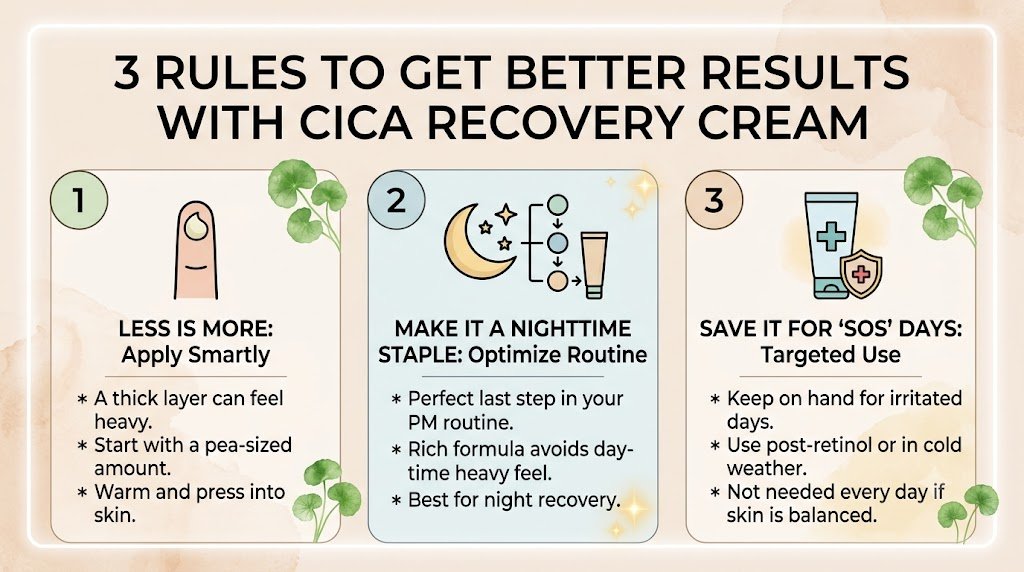
3 Rules for Better Results
- Less is more: A thick layer will not speed things up; it can just feel heavy or greasy.
- Night is easiest: Rich cica creams can pill or feel heavy under sunscreen and makeup, so many people keep them for the last step at night.
- Use it when skin needs it: If your skin feels balanced, you do not need it every day. Keep it for irritated days, nights after retinoids or exfoliation, and dry, cold weather.
Give your skin one to two weeks of consistent use before judging results. Redness can calm quickly, but barrier recovery takes longer.
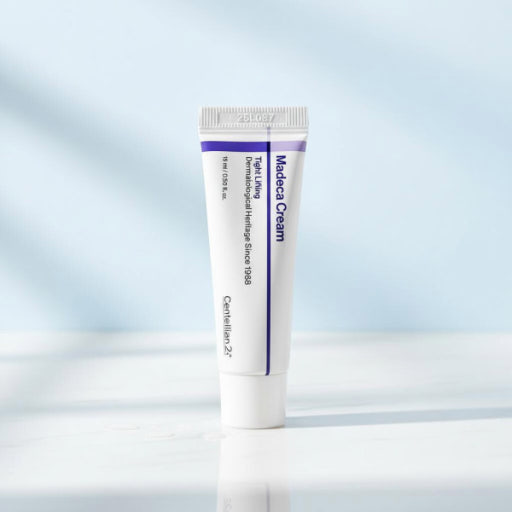
Madecassoside Products We’ve Looked At
- Centellian24 Madeca Cream Time Reverse Zero: ingredients, texture, and who it’s for
- Mediheal Madecassoside Derma Serum: inside the upgrade
- Mediheal Madecassoside Blemish Pad: 3 ways Koreans use it
- Mediheal Madecassoside Sun Serum: Korea vs. US formula
- Madeca Medi Patch: how it compares with typical acne patches
Madecassoside FAQ
Is madecassoside the same as cica?
Not exactly. “Cica” refers to Centella asiatica in general, and a cica product may contain a little extract or a lot. Madecassoside is one specific purified compound from the plant, so a label that lists it tells you more than “cica” alone.
What is the difference between madecassoside and madecassic acid?
Madecassic acid is the core molecule; madecassoside is that core with a sugar chain attached. Both are Centella actives, but madecassoside is the one most often named on Korean product labels, while madecassic acid usually appears as part of a standardized Centella extract.
Can I use madecassoside every day?
Generally, yes. It is not an exfoliant, so daily use is usually fine as long as the overall formula suits your skin. Follow the directions on the specific product.
Can I use it with retinol, vitamin C, or acids?
Yes, and that is one of its most common uses: as a calming layer on nights when you use stronger actives. Apply the active first, then the madecassoside product.
Is madecassoside good for oily or acne-prone skin?
The ingredient itself suits breakout-prone skin well. Choose a lighter format such as a serum, toner pad, or gel cream rather than a rich balm, and apply a thin layer.
Sources
- Bylka W, et al. Centella asiatica in cosmetology. Advances in Dermatology and Allergology, 2013.
- Bandopadhyay S, et al. Therapeutic properties and pharmacological activities of asiaticoside and madecassoside: A review. Journal of Cellular and Molecular Medicine, 2023.
This article is for general information and is not medical advice. Updated November 2026.
Pingback: The Best Barrier Creams at Olive Young Korea for Every Skin Type