
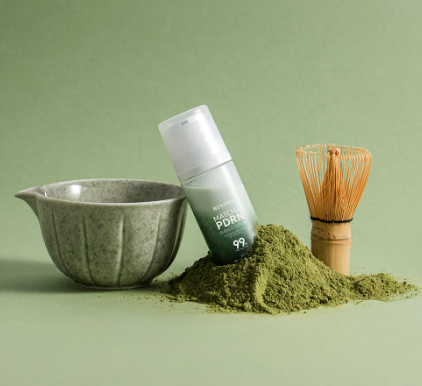
The Benton Matcha PDRN Bubble Serum launched in Korea on October 16, 2026, as a seasonal moisturizing serum that comes out of the pump as a fine, creamy foam. Benton built it around PDRN derived from Jeju matcha, a soy milk exosome ingredient, and 9.5% oil.
Most PDRN serums in Korea are watery ampoules, and many use salmon-derived PDRN. This one takes a different route on both counts. Here’s what Benton says is in it, what remains unconfirmed, and what early Korean reviews describe.
Why the Launch Is Getting Noticed
Benton is best known internationally for simple, ingredient-led products such as its snail and centella lines. Korean media coverage frames the Matcha PDRN Bubble Serum as a skincare launch for the change of seasons, when many people want more moisture without switching to a heavy cream.
For now, the serum is sold through Benton’s official online store rather than Olive Young. Benton ran a launch promotion from October 16 to October 29, 2026, according to the same coverage. A handful of Naver blog reviews appeared within the first week, at least one of them sponsored.
What Benton Says Is in It
According to Benton’s launch announcement, as reported by Korean media:
- PDRN derived from Jeju matcha, at 99% purity. As with other “99% purity” claims, this describes how pure the raw ingredient is, not how much of it is in the serum. Benton hasn’t published the concentration.
- Soy milk exosomes. No percentage was given.
- Jeju matcha ingredient, which gives the serum its green color.
- 9.5% oil, incorporated through a cream emulsion process. That’s what Benton credits for the creamy feel.
PDRN made from plants is a newer category in Korean skincare. It isn’t the same ingredient as the salmon-derived PDRN that brands usually cite, and there’s no established head-to-head comparison between the two.
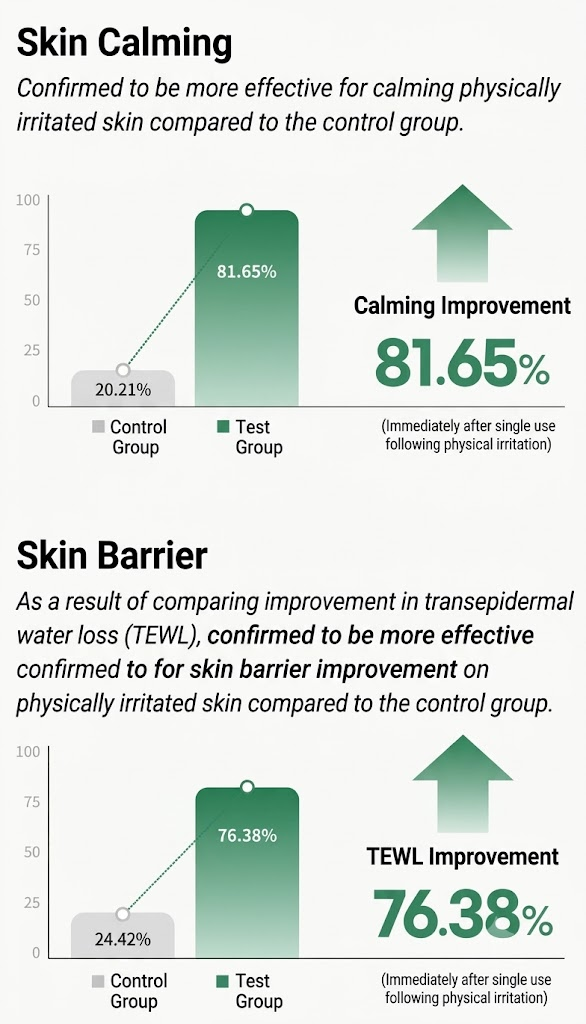
Benton also says a human application test showed improved moisture down to the 30th layer of the stratum corneum, the skin’s outermost layer. That’s a company-reported result. Treat it as product information, not a guarantee of the same result for everyone.
How the Matcha PDRN Bubble Serum Works
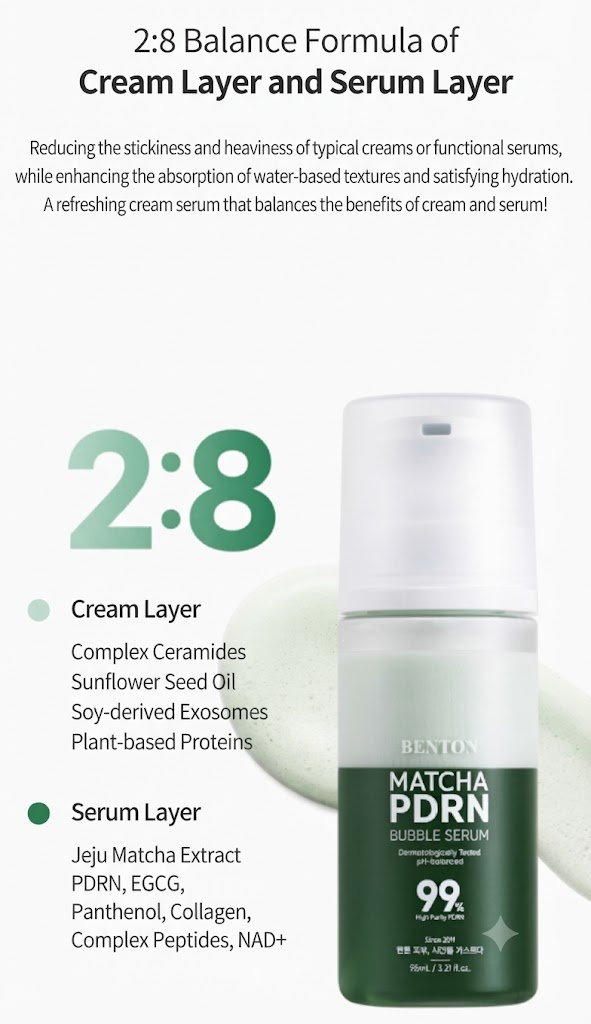
The serum comes in a 95 mL pump bottle. Korean reviewers say the bottle holds two separate layers, roughly a cream layer and a serum layer, that combine when you shake it. One sponsored review gives the ratio as about 20% cream to 80% serum. We couldn’t confirm that figure in Benton’s published information.
After shaking, the pump dispenses dense, fine bubbles rather than a liquid. Reviewers describe the foam flattening as soon as it touches the skin and spreading more like a light cream than an airy cleanser foam.
How Korean Reviewers Describe and Use It
Early Naver reviews mostly agree on texture:
- Creamy, fine foam that settles quickly
- No sticky or shiny film after patting it in
- Layers without pilling under moisturizer, sunscreen, or cushion foundation
Their routines are simple:
- Morning and night, after toner. Shake, pump a small amount, and press it into the face and neck.
- Several small pumps rather than one large one, since reviewers say a little foam covers a lot of skin
- A richer cream on top at night for those who want more moisture
- A light layer before makeup as a hydrating base
These impressions come from a small set of early reviews, so they may change as more people use the product.
Who It May Suit — and Who Might Skip It
Reviewers most often recommend it for skin that’s oily on the surface but feels tight underneath, a combination Koreans call 수부지 (subuji). It may also suit people who dislike sticky serums or want a moisturizing step that sits well under base makeup.
It’s probably not enough on its own for very dry skin in winter, and reviewers who pair it with a richer night cream seem to agree. If you specifically want salmon-derived PDRN, this is a different ingredient. People with a soy sensitivity may also want to check the full ingredient list before buying.
What Stands Out — and What Remains Unproven
What stands out is the format. A shake-to-mix foam with a cream layer and a stated 9.5% oil content is an unusual take on a PDRN serum, and it gives Benton a clear point of difference in a crowded category.
What remains unproven is most of the ingredient story. Benton hasn’t published the PDRN or exosome concentrations, the moisture test comes from the company, and the early reviews include sponsored content. A full ingredient list and a regular retail price weren’t available in text form when we checked.
Product Snapshot
- Product Name: Benton Matcha PDRN Bubble Serum (벤튼 말차 PDRN 버블 세럼)
- Brand: Benton
- Size: 95 mL
- Korean List Price: Not confirmed (sold on Benton’s official online store; check current pricing there)
- Launch (Korea): October 16, 2026
- Key Ingredients (per Benton): Jeju matcha-derived PDRN (99% purity raw material), soy milk exosomes, Jeju matcha, 9.5% oil
- Texture / Format: Two-layer formula, shaken before use, dispensed as a fine cream foam from a pump
- Best Suited To: People with oily-but-dehydrated skin who want a light moisturizing layer under makeup
- Source & Sponsorship Note: Korean reviewer impressions are drawn from three early Naver blog posts. One disclosed that Benton provided the product and payment, and the other two had no visible disclosure. Launch date, ingredient claims, and test results come from Benton’s announcement as reported by Korean media. Size was checked on Benton’s official store.
Last checked: October 25, 2026