
This post contains affiliate links. If you buy through them, KTrendStack may earn a small commission at no extra cost to you.
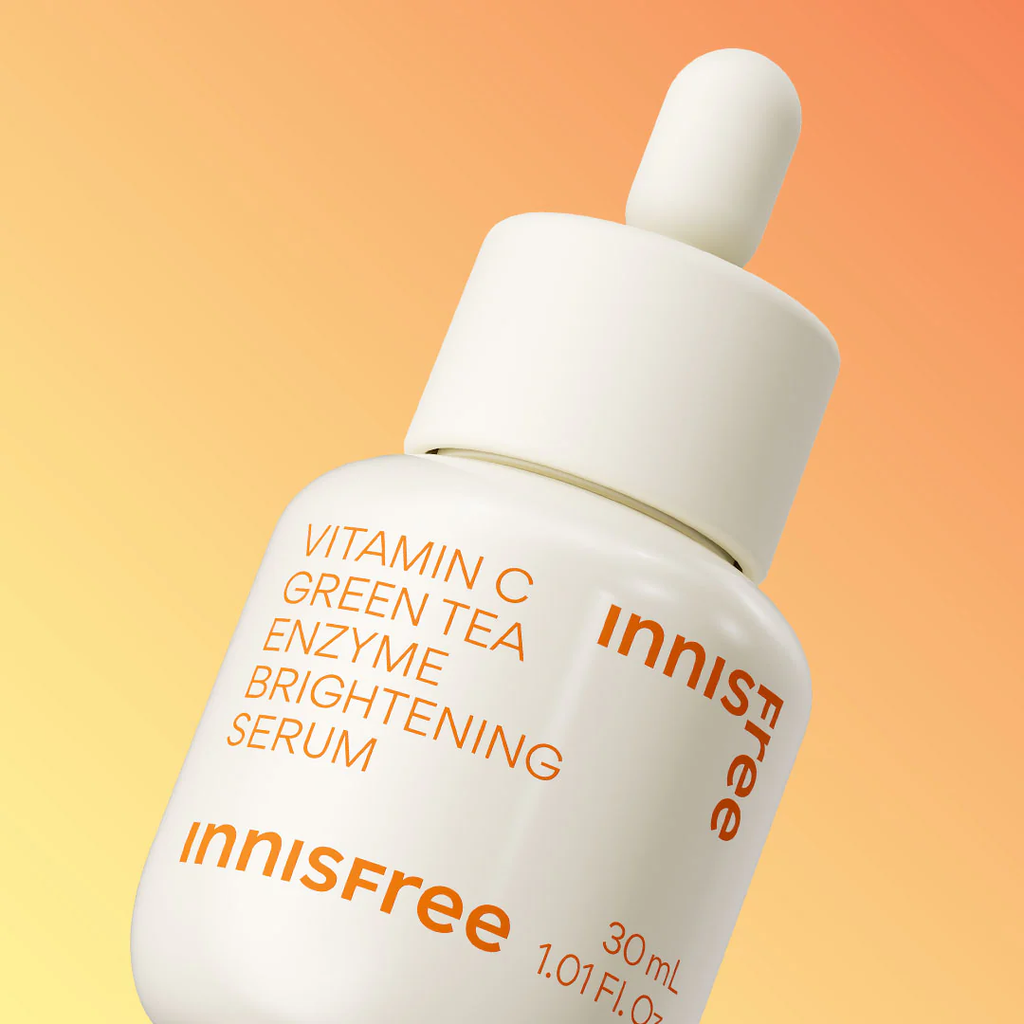
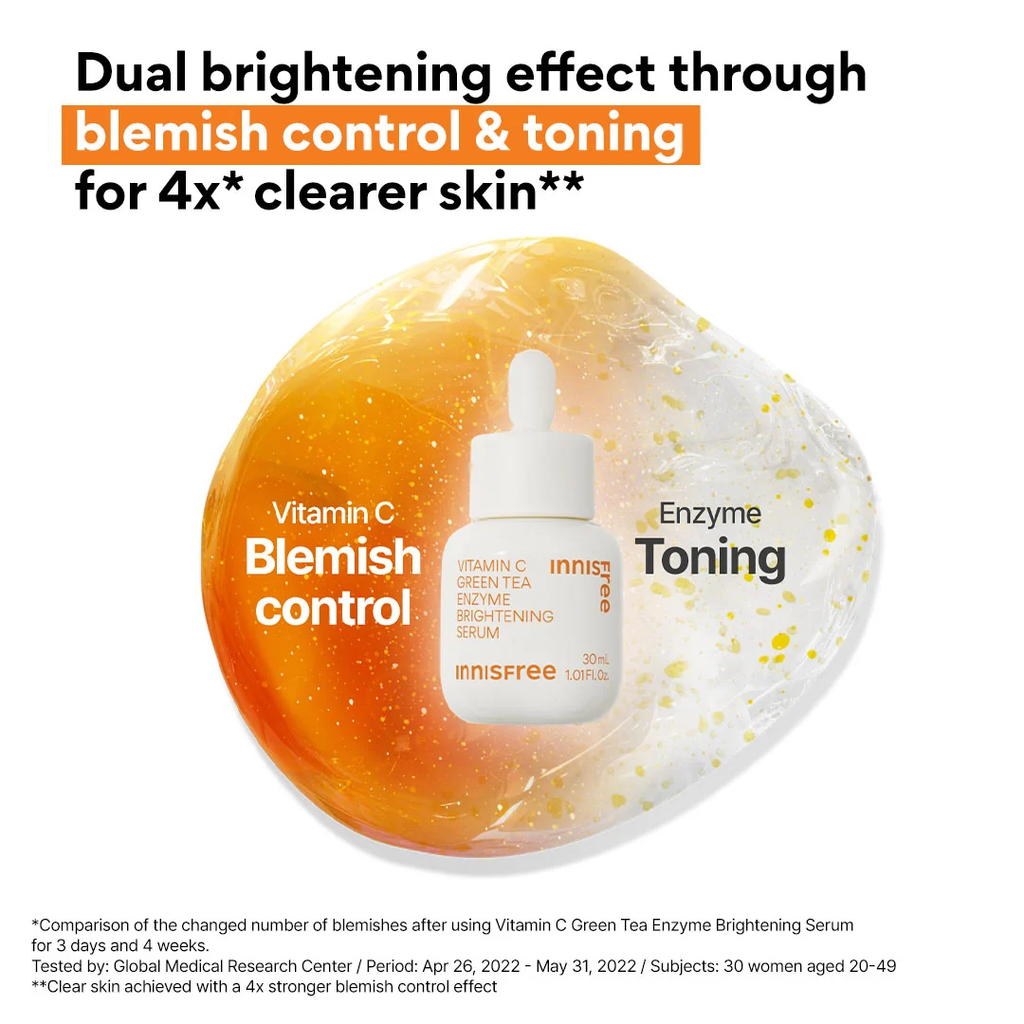
The Innisfree Vitamin C Capsule Serum is one of the most familiar brightening serums on Korean shelves, and it keeps turning up in Korean blog routines for dull skin and uneven tone. Outside Korea, Innisfree sells the same formula as the Green Tea Enzyme Vitamin C Brightening Serum.
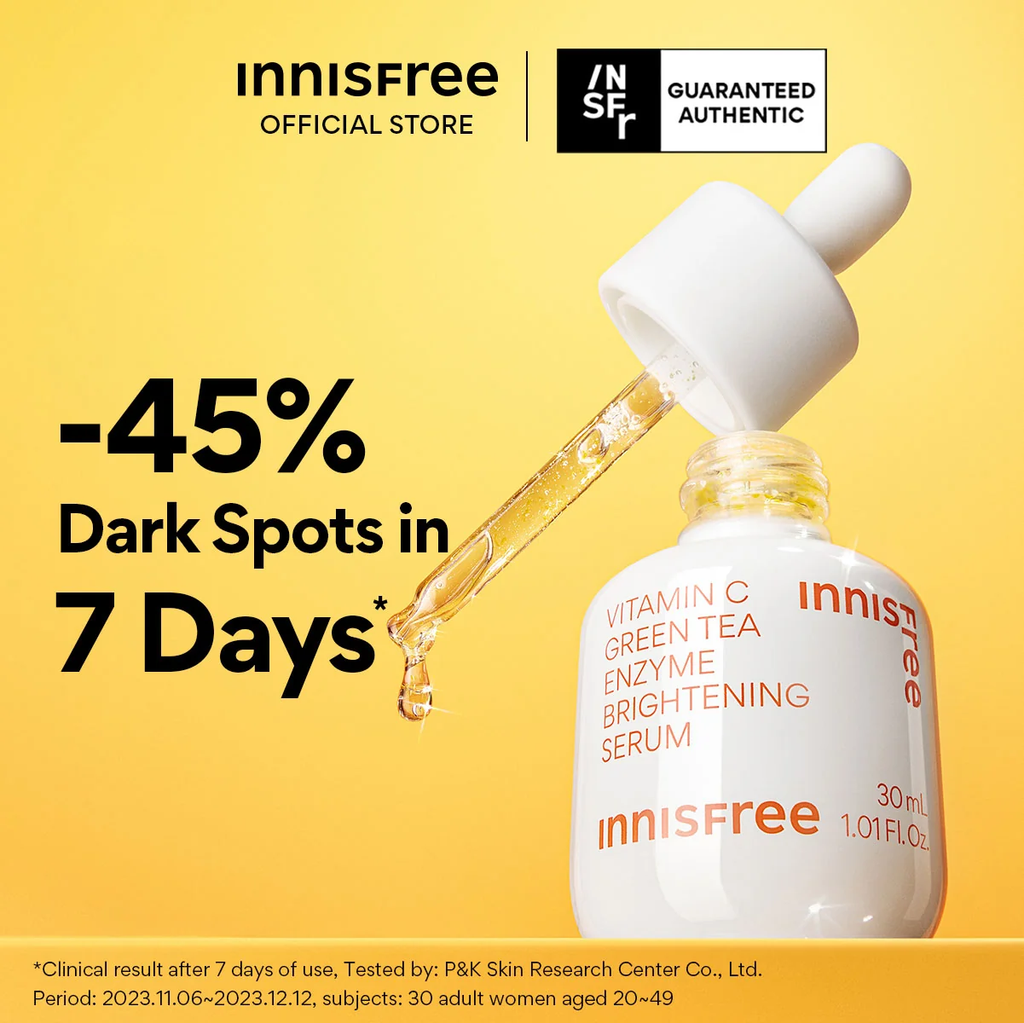
Its signature is visible: tiny yellow capsules suspended in a watery serum. The more useful question is what’s actually doing the work, and the official ingredient list answers most of it.
Why It’s Still Getting Attention in Korea
Innisfree markets the serum around a “90,000-capsule formula” aimed at dullness, and it’s registered in Korea as a brightening functional cosmetic, a category that requires approval of the active ingredient and its concentration. It’s sold at Innisfree’s own stores and at Olive Young, often in 30 mL two-packs and a larger 50 mL size.
On Naver, the serum shows up less as a launch-week novelty and more as an everyday step. Korean bloggers mention it in autumn “reset” routines and in posts about skin that looks tired after summer. Several of the posts we looked at were sponsored by the brand, so we treated them as usage notes rather than independent verdicts.
What’s in the Innisfree Vitamin C Capsule Serum
The full ingredient list on Innisfree’s Korean site includes concentrations for a few key ingredients, which is more detail than many brands share.
- 3-O-ethyl ascorbic acid at 20,000 ppm (2%). This water-soluble vitamin C derivative is the registered brightening active. It’s a more stable form than pure ascorbic acid, and it’s used at a moderate level here.
- Ascorbyl tetraisopalmitate at 100 ppm. An oil-soluble vitamin C derivative, present in a small amount. It’s likely part of the capsule system, though the brand doesn’t break that down.
- Protease at 150 ppm. An enzyme that appears to be what Innisfree calls its “green tea enzyme,” which the brand positions as gentle exfoliation.
- Supporting ingredients including niacinamide, panthenol, squalane, madecassoside, glutathione, gluconolactone, and ferulic acid.
There’s no fragrance on the list. The texture comes from a light gel base, and the capsules are designed to break as you spread the serum.
So, how strong is it? At 2% of a vitamin C derivative, it sits closer to an everyday brightening serum than to a high-strength pure vitamin C treatment. That fits how the brand and Korean reviewers frame it.
[INSERT IMAGE HERE: innisfree-vitamin-c-capsule-serum.jpg — alt text in ③]
What the Brand’s Claims Say
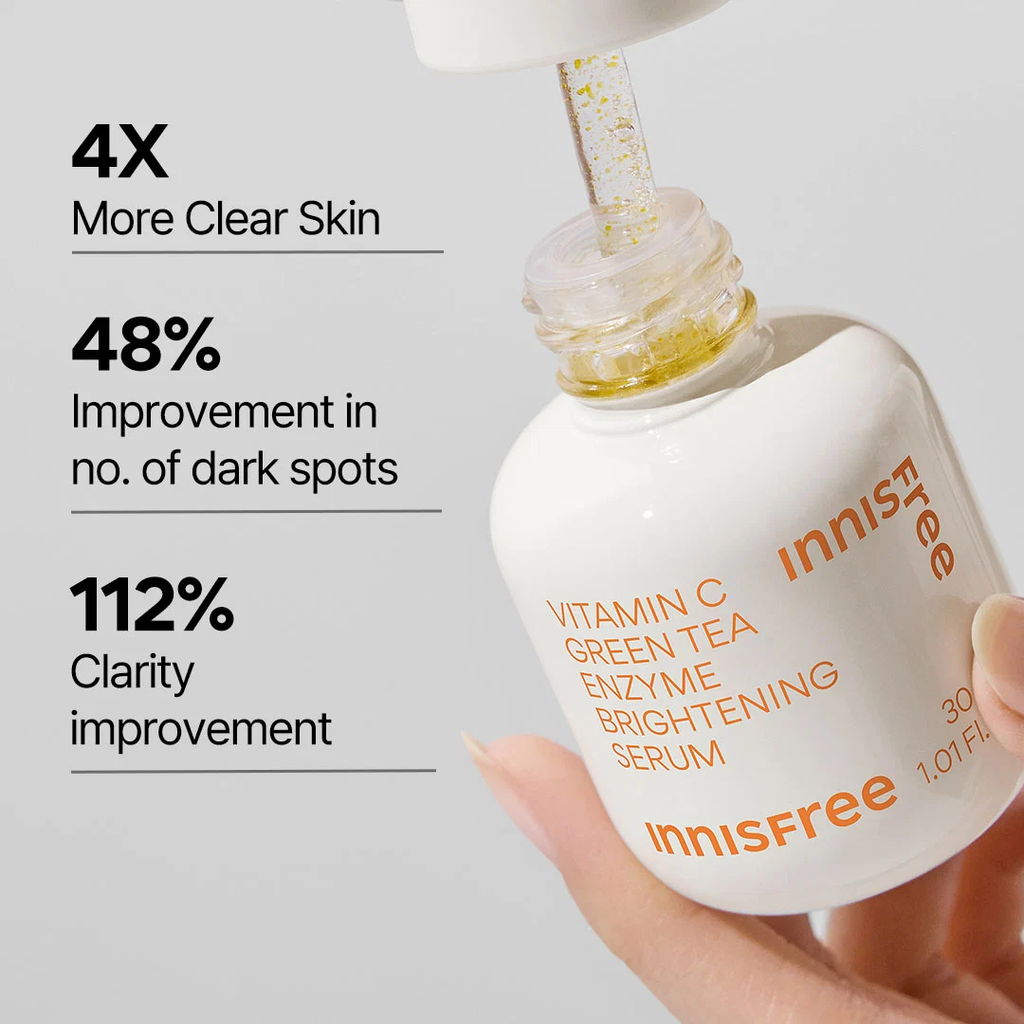
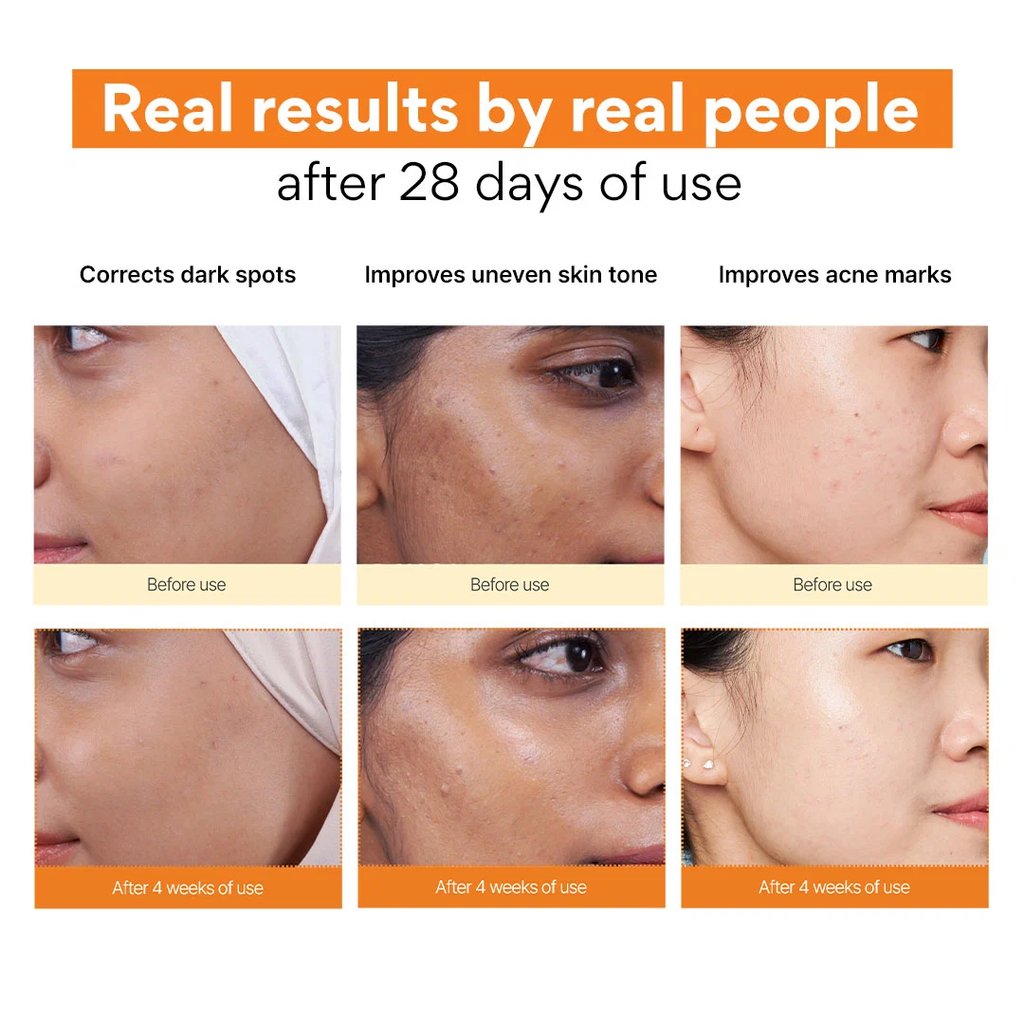
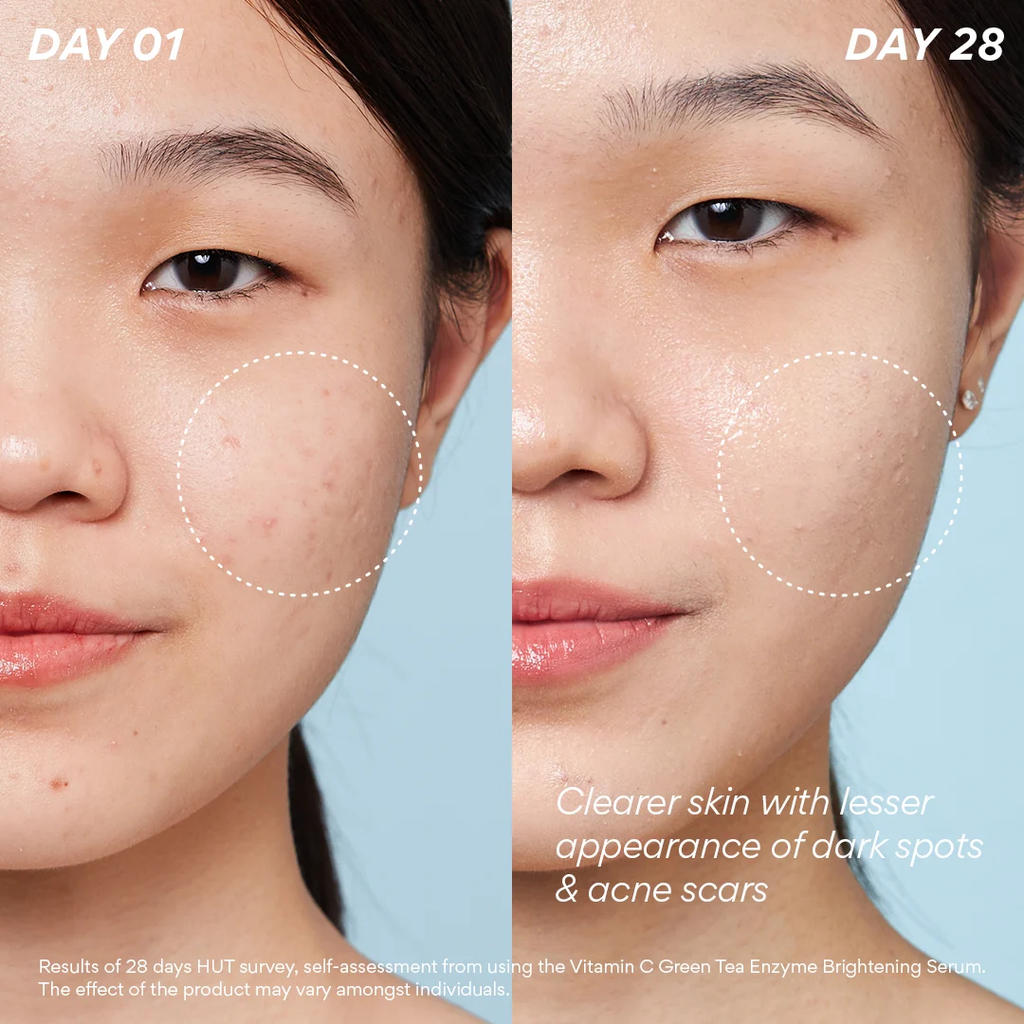
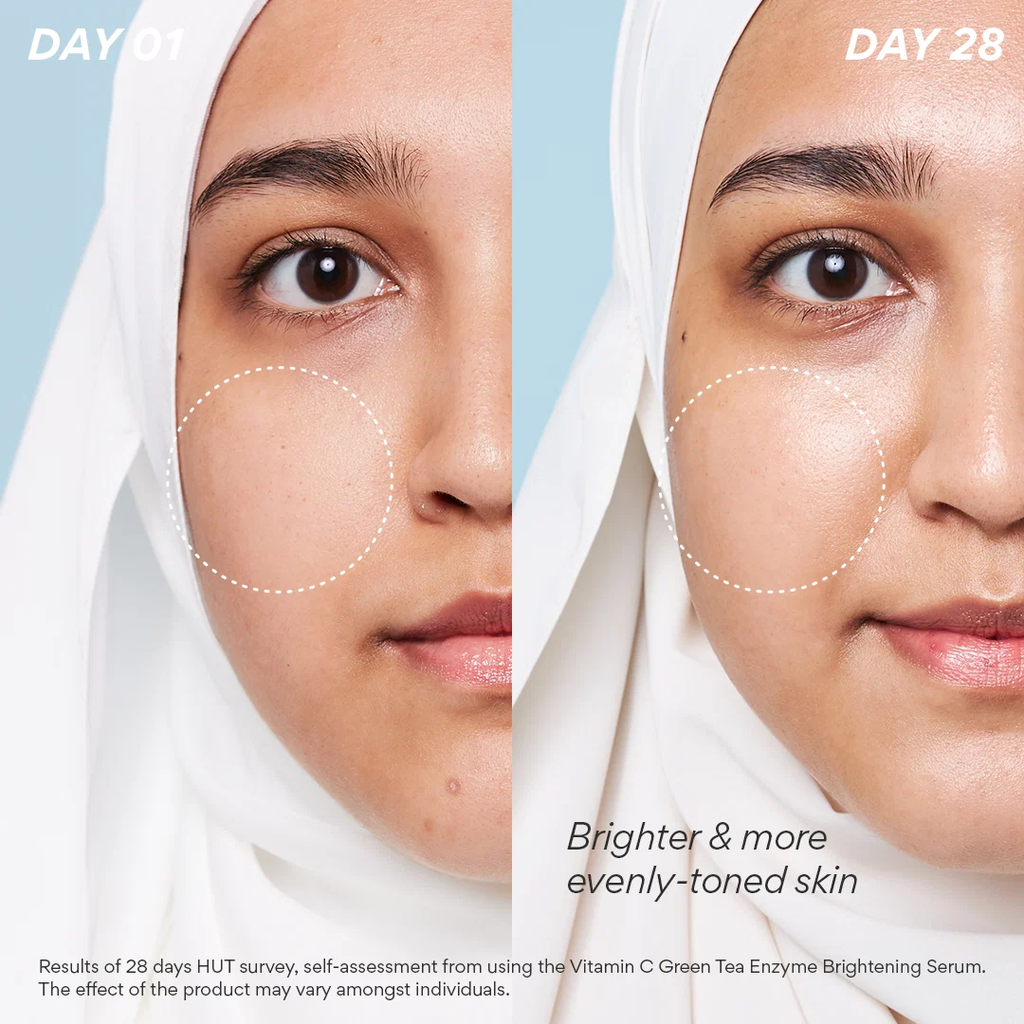
Innisfree says the capsule formula improved surface melanin by 23% in company-reported testing. The brand hasn’t published the study conditions on its product page, so treat the number as supporting product information, not a guarantee of the same result for everyone.
The brand also describes the serum as low-irritation, citing a primary skin irritation test on sensitive skin. That’s useful context, but it doesn’t mean every sensitive-skinned person will tolerate it. Some Korean blog posts also repeat an absorption figure and describe the formula as stable in daylight. We couldn’t find those claims in Innisfree’s published product information, so we’ve left them out.
How Korean Reviewers Use It
Korean reviewers describe a thin, watery serum with visible yellow capsules that sinks in quickly without a sticky finish. Their routines look similar:
- After toner, as the serum step, morning or night
- A few drops dotted on the cheeks, nose, and forehead, then spread out
- Extra on dull areas, such as along the cheekbones
- Under moisturizer and sunscreen in the morning, since the texture layers easily
Innisfree’s official directions say to massage the serum gently from the center of the face outward with your fingertips. Many reviewers pat it in instead. Either way, pairing a vitamin C step with daily sunscreen is standard advice.
Who It May Suit — and Who Might Skip It
The serum may suit people looking for a lightweight, fragrance-free brightening step for dullness or uneven tone, especially if strong pure vitamin C serums have felt like too much.
If you want a high-strength L-ascorbic acid serum, this isn’t that product. And if your routine already includes several exfoliating or brightening steps, it’s worth introducing this one slowly.
What Stands Out — and What Remains Unproven
What stands out is how much can be checked: a 2% vitamin C derivative as the registered active, a supporting cast of niacinamide and panthenol, no added fragrance, and clear Korean pricing.
What remains unproven is how much the 90,000 capsules add beyond the formula itself, since the oil-soluble vitamin C in them is listed at just 100 ppm. The 23% melanin figure and the low-irritation result come from brand testing. The serum is best understood as a gentle daily brightening step rather than a treatment.
Product Snapshot
- Product Name: Innisfree Vitamin C Capsule Serum (sold internationally as Green Tea Enzyme Vitamin C Brightening Serum)
- Brand: Innisfree
- Size: 30 mL (also 50 mL)
- Korean List Price: ₩38,000 for 30 mL on Innisfree’s official Korean site (₩28,500 sale price as of September 30, 2026)
- Key Ingredients: 3-O-ethyl ascorbic acid (2%), ascorbyl tetraisopalmitate (100 ppm), protease (150 ppm), niacinamide, panthenol, squalane, madecassoside; no fragrance listed
- Texture / Format: Watery serum with visible yellow capsules, dropper bottle
- Best Suited To: People looking for a lightweight daily brightening step for dullness or uneven tone
- Source & Sponsorship Note: Korean reviewer impressions are drawn from Naver blog posts, some of which were brand-sponsored. Product specifications, price, ingredients, and functional cosmetic status were checked against Innisfree’s official Korean site.
Check the current price on Stylevana
Last checked: September 30, 2026